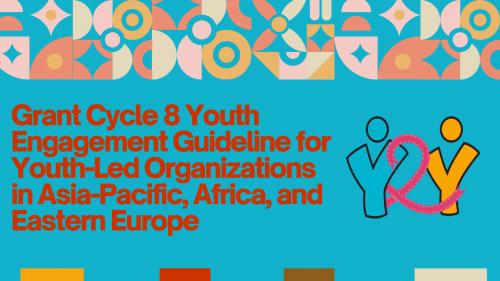
Grant Cycle 8 Youth Engagement Guideline for Asia-Pacific Youth-Led Organizations
February 20, 2026
Youth-led organizations play a pivotal role in the fight against HIV, tuberculosis (TB), and malaria. In the Asia-Pacific region, young people (ages 15–24) account for about one-quarter of new HIV infections in countries like Indonesia, Myanmar, the Philippines, Thailand, and others; nearly half of new infections in 2022 occurred among youth. Overall, the region still sees 300,000 new HIV infections and 150,000 AIDS-related deaths per year, with several countries experiencing rising epidemics among young people. TB and malaria also remain major challenges: the World Health Organization reports that the majority of global TB cases (over 60%) occur in Asia-Pacific, and malaria- while nearing elimination in some Asia-Pacific countries is threatened by drug resistance and climate change-driven shifts in transmission.
Despite these challenges, global efforts are yielding results. Programs supported by the Global Fund have saved 65 million lives since 2002, cutting the combined death rate from HIV, TB and malaria by 61%. More people than ever are on HIV treatment (25 million globally by 2023) and receiving prevention tools, TB detection and treatment have rebounded post-COVID with innovative approaches (e.g. AI-based screening), and hundreds of millions of mosquito nets and treatments have been delivered for malaria. However, progress is uneven: inequities and human rights barriers (stigma, discrimination, punitive laws) still prevent many young key populations from accessing services. The COVID-19 pandemic further exposed vulnerabilities, devastating health systems and shrinking funding for health. It also underscored the need for pandemic preparedness and resilient health systems, which the Global Fund has now integrated into its 2023–2028 Strategy.
As the Grant Cycle 8 process has begun, Youth LEAD developed the Grant Cycle 8 Youth Engagement Guideline for Asia-Pacific Youth-Led Organizations, to help youth leaders and youth-led organizations familiarize themselves with the Global Fund process at the national level, specifically for the grant development process, to ensure youth representation in decision making process and youth-specific interventions under the new country proposal.
Read More